
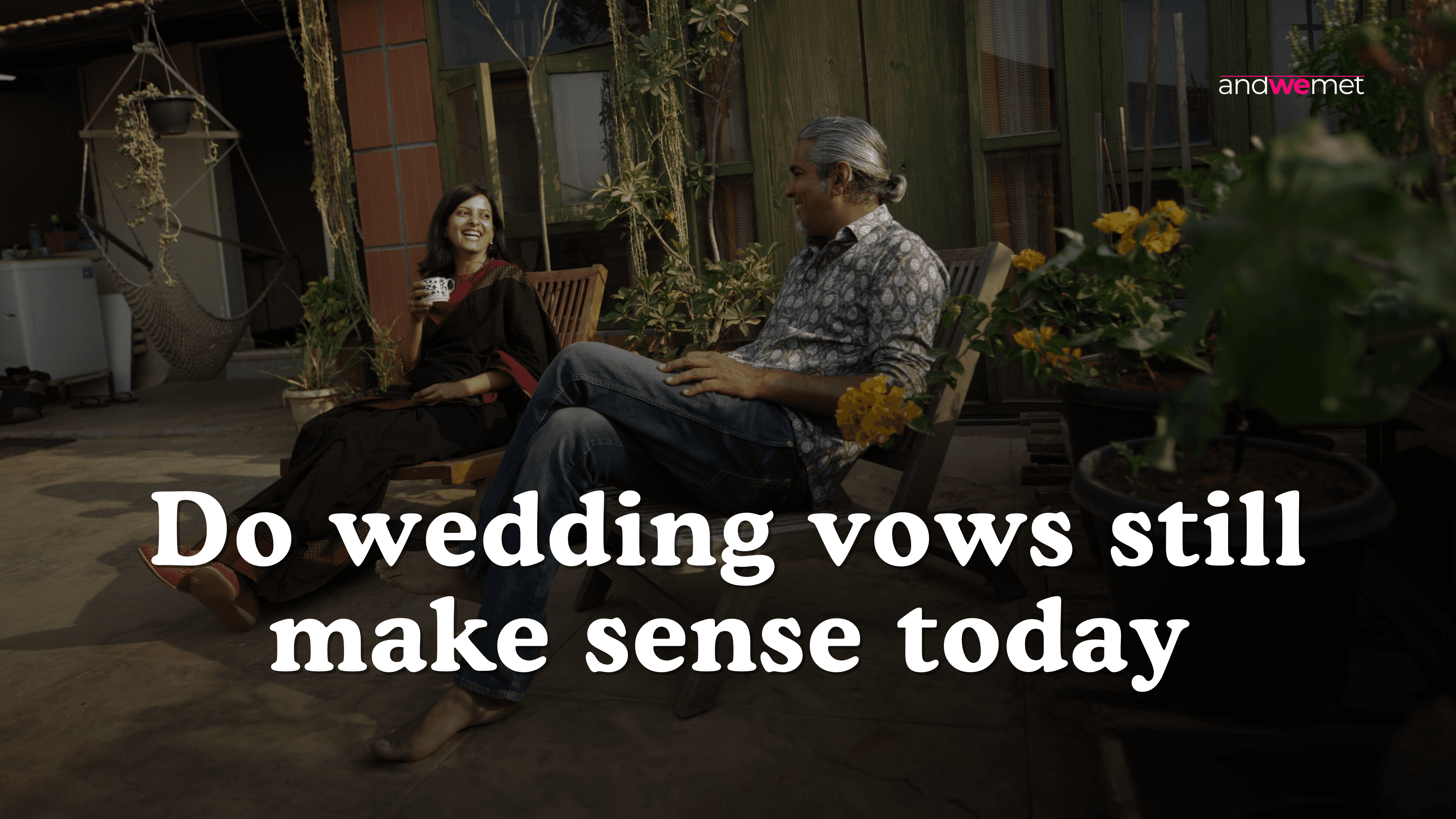
Do Modern Relationships Need Modern Wedding Vows?
For generations, wedding vows were spoken in a very different world.
A world where:
roles were clearly defined
families lived together
work stayed outside the home
staying married was often a social obligation
Fast forward to today and relationships are being lived in conditions those vows were never written for.
So the question isn’t whether commitment matters less today.
It’s whether our understanding of commitment needs updating.
How relationships today are different from earlier generations
Modern relationships are not weaker — they are simply more exposed.
Here’s what has fundamentally changed:
1. Both partners are usually working
Careers, long hours, emotional fatigue, ambition — all now exist on both sides.
Love has to survive exhaustion, not just disagreement.
2. Nuclear living has removed buffers
Earlier, extended families absorbed conflict.
Today, couples carry everything — emotional labour, logistics, conflict resolution — on their own.
3. There are more distractions than ever
Phones, social media, constant availability, comparison culture, “better options.”
Disconnection today doesn’t come from hatred — it comes from drift.
4. Individual identity matters more
Modern partners don’t dissolve into marriage.
They want growth, autonomy, and selfhood — alongside companionship.
5. Walking away is socially acceptable
Earlier marriages survived because leaving was difficult.
Today, marriages survive only if staying feels intentional.
Old vows assumed stability. Modern relationships require skills.
Traditional vows assumed:
fixed roles
external pressure to stay
limited choices
Modern relationships require:
emotional regulation
communication skills
repair after conflict
ego management
conscious choosing, again and again
This gap is where many marriages struggle.
Not because love is missing —
but because staying was never clearly defined.
So do wedding vows need to change?
Not in spirit.
But yes — in language.
Because today’s challenges aren’t about loyalty alone.
They’re about:
showing up when tired
choosing conversation over withdrawal
managing ego instead of escalating conflict
staying when it’s inconvenient
What modern commitment actually sounds like
Instead of idealised promises, modern vows need to acknowledge reality.
Here’s what commitment should be vowed as the couple enters into one:
We choose not to give up on each other, especially when it feels easier to withdraw
We accept that love is not always easy or convenient
We accept that we are imperfect, and still choose each other
When ego shows up, we pause, listen, and choose the relationship over being right
These aren’t romantic lines.
They are practical commitments.
And perhaps that’s what makes them powerful.
Why this conversation matters (especially for singles)
Many singles today fear marriage not because they don’t want companionship —
but because they’ve seen relationships fail despite love being present.
When marriage is sold as chemistry, compatibility, and happiness alone,
reality feels like failure instead of growth.
Reframing vows helps reframe expectations.
Marriage isn’t sustained by spark.
It’s sustained by skills, self-awareness, and repair.
Actually
Modern relationships don’t need less commitment.
They need more honest definitions of it.
Updating vows isn’t about rejecting tradition.
It’s about respecting the reality we’re actually living in.
And perhaps that’s the most committed thing couples today can do.
What do you think?


